2026 Section 179 Tax Deductions
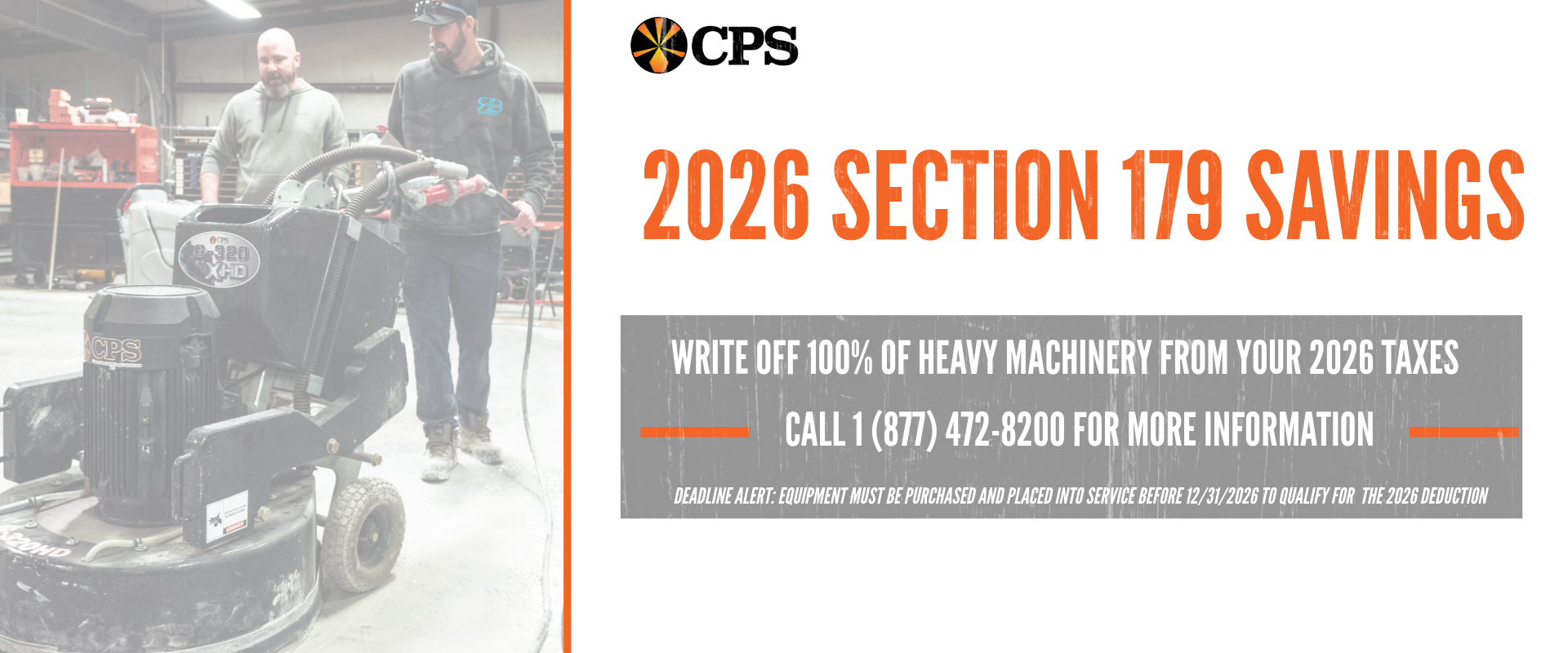
Section 179 Tax Deduction for 2026
Invest in qualifying equipment before year-end and potentially reduce your business tax bill
If your business needs a new concrete grinder, dust collector, burnisher, floor scrubber, or other surface-preparation equipment, 2026 may be a good time to make the investment. Section 179 of the federal tax code may allow eligible businesses to deduct the cost of qualifying equipment in the year it is placed in service, rather than spreading the deduction over several years.
2026 SECTION 179 QUICK FACTS
• Maximum potential Section 179 deduction: $2,560,000
• Qualifying equipment must generally be placed in service during the 2026 tax year
• New and used equipment may qualify when the applicable requirements are met
• Financing may still allow eligible businesses to take advantage of Section 179
• Consult your accountant or tax advisor to determine eligibility
What Is Section 179?
Section 179 allows an eligible business to elect to expense the cost of certain qualifying property in the year the property is placed in service. For contractors, this can make an equipment purchase more manageable by creating a potential current-year deduction while adding productive equipment to the business.
The deduction is not automatic, and the full purchase price is not guaranteed to be deductible in every situation. Eligibility and the final deduction depend on the property, business use, taxable income, total qualifying purchases, and other tax rules.
What Types of Equipment May Qualify?
Qualifying property can include many types of equipment used in the active operation of a business. For concrete contractors and flooring professionals, possible examples include:
• Concrete grinders and polishing machines
• Industrial vacuums and dust-collection equipment
• Surface-preparation equipment and related machinery
• Business trucks and trailers, subject to vehicle-specific rules
• Computers, business software, office equipment, and other eligible property
Both new and used equipment may qualify if it is newly acquired by the business and meets the applicable Section 179 requirements. Contractors should review each planned purchase with a qualified tax professional to confirm eligibility.
The Equipment Must Be Placed in Service
Purchasing equipment alone may not be enough. To be considered for a 2026 deduction, qualifying equipment generally must be ready and available for business use during the 2026 tax year. For most calendar-year businesses, that means the equipment should be delivered, set up, and placed in service no later than December 31, 2026.
Year-end demand, production schedules, freight timing, and equipment setup can all affect delivery. Planning early gives your business more time to select the right machine and put it to work before the deadline.
A Simple Example
Assume a qualifying business purchases $100,000 in eligible equipment and places it in service during 2026. If the business qualifies to deduct the full amount under Section 179 and has an effective tax rate of 35%, the estimated tax savings could be $35,000. In this simplified example, the net equipment cost after the estimated tax savings would be $65,000.
Example Item
Equipment Cost - $100,000
Potential First Year Section 179 Deduction - $100,000
Effective Tax Bracket - 35%
Tax Savings from Use of Section 179 - $35,000
Net Cost After Section 179 Savings - $65,000
This example is for illustration only. Actual tax savings vary by business and tax situation.
Financing and Cash Flow
Financing may allow a business to acquire needed equipment while preserving cash for payroll, materials, and other operating expenses. Section 179 may apply to qualifying financed or leased equipment when the applicable tax requirements are met, but financing terms and tax treatment should be reviewed before a purchase is finalized.
Plan Before the Year-End Rush
Before purchasing equipment, consider the work you have scheduled, current machine capacity, maintenance needs, and the equipment that could make your crews more productive. A tax deduction should support a sound business purchase, not replace one.
A practical year-end checklist:
• Review your projected 2026 taxable income with your accountant or tax advisor.
• Identify the equipment your operation needs and confirm that it may qualify.
• Confirm availability, delivery timing, and setup requirements.
• Make sure the equipment is placed in service within the required time.
• Keep purchase, financing, delivery, and business-use records.
Find the Right Equipment for Your Business
The right equipment investment should do more than create a potential tax deduction. It should help your crew complete work more efficiently, take on the right projects, and reduce the limitations caused by undersized, outdated, or unreliable equipment.
Concrete Polishing Solutions offers concrete grinders, dust collectors, burnishers, floor scrubbers, and surface-preparation equipment for contractors working in demanding environments. The CPS team can help you evaluate equipment based on the type of work you perform, typical project size, power availability, production goals, dust-control needs, and the equipment already in your fleet.
Equipment availability and delivery timing also matter. To be considered for a 2026 Section 179 deduction, qualifying equipment generally must be placed in service during the 2026 tax year. Starting the conversation early gives CPS time to help you compare options, confirm availability, and select a practical setup for your business.
Talk with CPS: 1 (877) 472-8200 | www.go2cps.com
IMPORTANT TAX NOTICE
This article is provided for general informational purposes only and is not tax, legal, or accounting advice. Section 179 eligibility, deduction amounts, deadlines, and tax treatment depend on individual circumstances and applicable law. Consult a qualified tax professional before making a purchase or tax decision.